GTM engineering for investors and their portfolios.
Capital and a board seat do not build pipeline. Portfolio companies are asked to grow faster with leaner teams, and each one rebuilds the same go-to-market from nothing. We give the portfolio one engine: the account data, the signals and the outreach, deployed company by company and measured in pipeline the board can see.
A founder hired a CFO and a head of revenue operations in one quarterRaise readiness · this morningPublic
Twelve accounts on a portfolio company's list posted the role it sells toHiring signals · this weekPublic
A strategic buyer in your sector opened a corporate development roleExit signal · yesterdayPublic
A profitable founder-owned company in your thesis has taken no outside capitalOwnership and financials · this monthLicensed
Pipeline coverage at one portfolio company slipped for a second weekPortfolio reporting · this weekYour data
Illustrative, not client data. Every line is a signal we can collect: from a public source, from data we license, or from your own systems.
Who we work with
GTM engineering for investors and their portfolios
Private equity operating partners
Value creation with revenue at the centre
A plan that depends on revenue growth, and portfolio companies without the system to deliver it.
Usually led by Operating partner, portfolio CRO
Venture capital platform teams
Support founders actually use
Portfolio support that goes beyond introductions, measured in customers rather than meetings.
Usually led by Platform lead, partner
Portfolio company leaders
A board asking for pipeline
A growth target, a small team, and no time to build the go-to-market engine from scratch.
Usually led by CEO, CRO
What investment asks for first
8 of our 40 solutions, in your words.
The same engine we run in every industry, pointed at the moments that start a deal in yours. See all 40 on the capability wheel →
Data Foundation
Total account mapping
"The company has never sized its real market, account by account."
Data Foundation
ICP data acquisition
"Every new portfolio company starts its account list from nothing."
Data Foundation
CRM cleanup and deduplication
"The CRM we inherited at acquisition is full of duplicates."
Outbound
Multi-channel sequencing
"Outreach runs in three tools and nobody coordinates it."
Outbound
Partner recruitment
"The company needs distributors in a new market and has no system for finding them."
Expand and Retain
Cross-sell campaigns
"Customers buy one product and never hear about the rest, and retention stalls."
Sales Enablement
Deal risk flags
"Deals stall, and the board finds out at the quarterly review."
Data Foundation
Warm path mapping
"We never use the relationships the fund already has."
Where the evidence comes from
Every name on the list comes with a reason it is now.
Who each company sells to
Every company's market, account by account, sized before the plan is set.
What is changing
Hiring, funding, leadership and tool changes across each company's target accounts.
Who the fund already knows
Warm paths through the people around the fund, the portfolio and its advisers.
What the board sees
Pipeline by company, sourced and dated, from the CRM rather than a spreadsheet.
And here is where we get it
Public sources
Company registry filings, funding and acquisition announcements, job posts, patent and trademark filings, leadership moves.
Data we license
Private company data and deal histories, headcount and technology trend data, fund and mandate news.
Your own systems
The fund's own dealflow notes and CRM, each portfolio company's pipeline, the adviser and co-investor network, product usage inside the portfolio.
Every signal on this page is one we can collect. Some are public, some come from data we license, and some are already inside your systems. What is available varies by market and by licence, so the workshop settles what can be collected for you before anything is built.
Built in your CRM, with Clay as the data and signal layer. You see every approach and every reply, every week.
Questions
Asked by investment teams.
Other industries we work in:
How does GTM engineering create value in a portfolio?
Revenue growth drives value, and most portfolio companies lack the system to grow revenue without adding headcount. We deploy the same engine across companies, adapted to each one's market, so the approach is shared and the pipeline is measurable.
Do you start with one portfolio company or the whole fund?
One. A single company proves the model, and the fund decides whether to extend it.
Can the same signals help the fund find deals?
Yes. The signals that show a company is ready to buy also show a company getting ready to raise: senior finance hires, fast team growth, new markets. The workshop is where we decide whether that is worth building.
Where does the data behind these signals come from?
Three places. Public sources such as company registry filings, funding and acquisition announcements, job posts, patent and trademark filings, leadership moves. Data we license: private company data and deal histories, headcount and technology trend data, fund and mandate news. And your own systems: the fund's own dealflow notes and CRM, each portfolio company's pipeline, the adviser and co-investor network, product usage inside the portfolio. What is available varies by market and by licence, so the workshop settles what can be collected for you before anything is built.
Start here
Twenty minutes. Then we decide together.
Tell us where you are and what you need, and a Co-Founder listens. If the call goes well and we all agree, we recommend a 60-minute workshop, where we map how your accounts, data and outreach work today and you leave with a written plan.
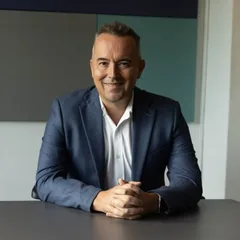

Hosted by Steve Dawson and Charles Tidswell, Co-Founders